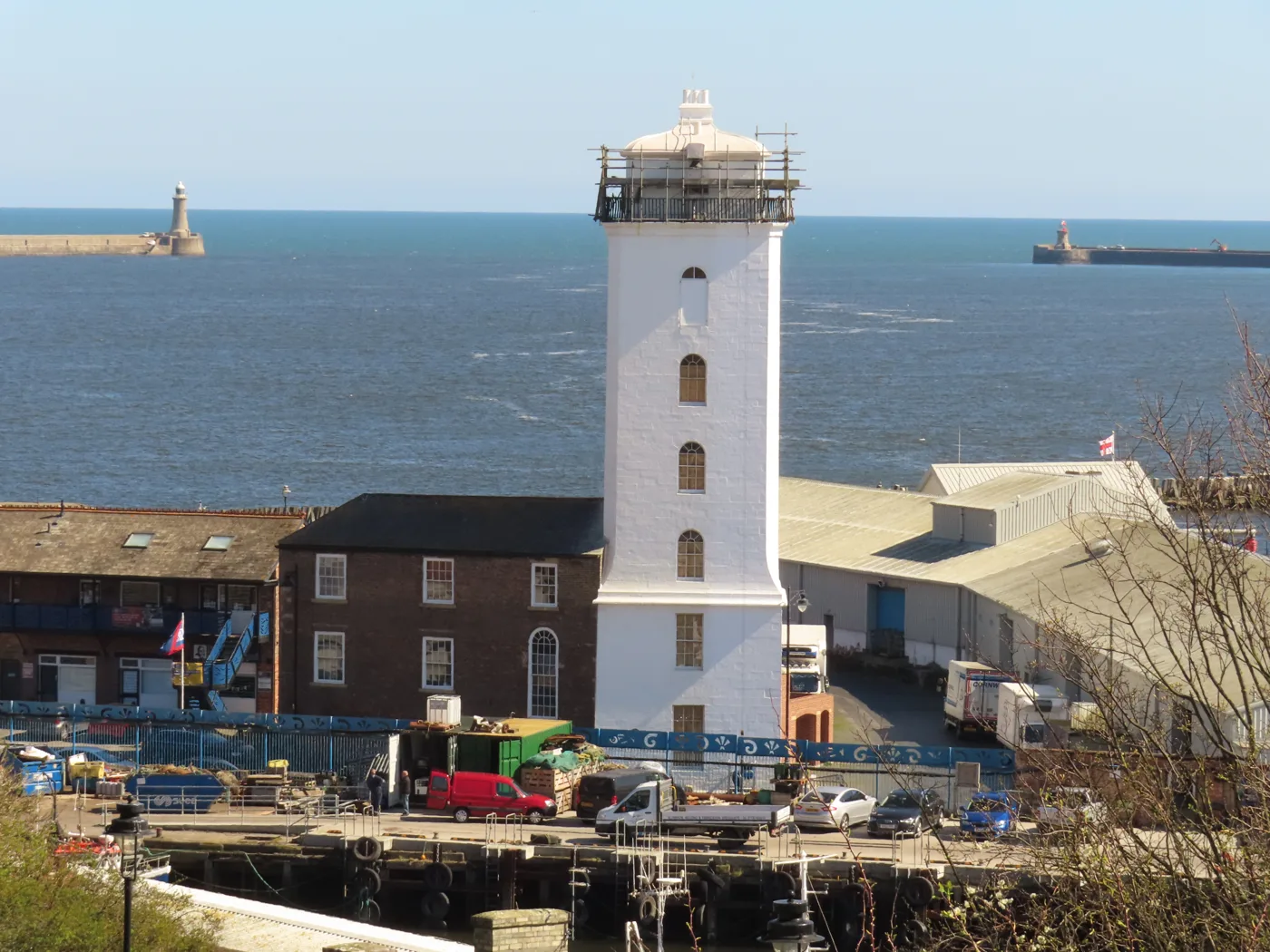
Officers back 138 flats and houses on the old Tyne Brand site tonight, with zero affordable homes and £587,051 of contributions waived on viability.
North Tyneside’s planning committee decides tonight whether 138 homes can be built on the derelict Tyne Brand factory site at the Fish Quay in North Shields. Officers are recommending approval.
The recommendation comes with two things residents will notice. The scheme would provide no affordable housing at all, against a council policy that seeks 25%. And of roughly £633,557 in contributions that council service areas asked for, officers advise that all but £46,506 should be dropped (officer report, application 25/01299/FULM).
The committee meets at 6pm at the Chamber, Quadrant, The Silverlink North, Cobalt Business Park (agenda, 19 August 2026).
What is proposed
The application is from Kickpoint Ltd, with NORR Consultants as agent. It covers the former Tyne Brand factory on the north bank of the Tyne, bounded by Union Road and Brewhouse Bank, inside the Fish Quay Conservation Area. The site has been vacant and largely derelict since the factory closed.
The scheme would deliver:
- 6 townhouses, 20 duplex dwellings and 112 apartments, 138 homes in total
- one, two and three-bedroom units in buildings of two to five storeys
- 203 square metres of flexible commercial floorspace fronting Union Road
- 150 parking spaces, in an undercroft car park and surface areas
- new streets, courtyards and public realm, with the main vehicle access from Tanners Bank
One detail matters for anyone buying or renting there. The council’s highways team states that end users will not be entitled to parking permits in this area, and that it is for the developer to tell them so.
The site is already allocated for housing in the Local Plan as Tanners Bank West, Site 58. The plan suggested it might be capable of about 100 homes. The application is for 138.
The money that will not be paid
Council service areas asked for a standard set of contributions under a Section 106 agreement. The applicant submitted a viability assessment, which was independently reviewed. It concluded that the development produces a negative residual land value, meaning it does not make enough money to carry the costs.
Officers accepted that. The report states that the scheme “cannot viably support policy-compliant affordable housing provision or the contributions set out above”.
| Requested by | Amount | Recommended outcome |
|---|---|---|
| Playing pitches | £155,722 | Not sought |
| Built sports facilities | £127,559 | Not sought |
| Equipped play | £98,700 | Not sought |
| Highways, pedestrian crossings on Tanners Bank | £80,000 | Not sought |
| Highways, Travel Plan bond | £40,000 | Not sought |
| Employment and training | £33,300 plus 0.5% of commercial capital costs | Not sought |
| Ecology | £27,495 | Not sought |
| Allotments | £21,774.72 | Not sought |
| Highways, travel plan monitoring | £2,500 | Not sought |
| Coastal mitigation | £46,506 | To be secured |
Only two payments would be tied into the legal agreement: the £46,506 for coastal mitigation, which protects the Northumbria Coast Special Protection Area, and a £3,650.93 biodiversity monitoring fee. A Community Infrastructure Levy payment is still required.
That leaves £587,051 of requested contributions, plus the affordable homes, off the table. Officers are candid about the cost: the absence of affordable housing “attracts moderate negative weight in the planning balance”, and the loss of the wider contributions “attracts some additional weight against the proposal”.
Why officers still say yes
The decisive number is the council’s housing land supply. North Tyneside can demonstrate only 2.82 years of deliverable housing sites, against a local housing need of 989 dwellings a year and a national minimum of five years.
That shortfall engages the “tilted balance” in the National Planning Policy Framework. In plain terms, permission should be granted unless the harm significantly and demonstrably outweighs the benefits. Officers conclude it does not.
They also point to the state of the site itself. It is long derelict, prominent, and identified in the Fish Quay Neighbourhood Plan supplementary planning document as one of three priority projects for the area.
Historic England raised no objection on heritage grounds, saying the scheme “fits spatially and visually within the street scene of the Fish Quay Conservation Area” and that added architectural detail had answered its earlier concern about plainness. The Northumberland and Newcastle Society supports the application, noting the site has suffered sustained antisocial behaviour that left most remaining buildings beyond renovation.
The objections, and one that has not been withdrawn
Seventeen objections were received. The report groups them under headings that will be familiar to anyone who has watched the Fish Quay change:
- parking provision judged inadequate, with overspill onto surrounding streets
- traffic and congestion on Brewhouse Bank, Tanners Bank, Bird Street and Union Road
- density, with objectors calling the scheme overdevelopment for the site
- building heights dominating the area and appearing out of character
- loss of sea views and outlook, particularly from North Harbour Apartments, Bird Street and Brewhouse Bank
- harm to the Conservation Area and to the setting of the Grade II listed Low Lights Tavern and the Counting House
- too little publicly accessible open space, and too little retail and leisure to support Fish Quay events and tourism
The council’s own Principal Ecologist maintains an objection. The site’s mixed scrub sits in a designated wildlife corridor, and the biodiversity metric shows an on-site habitat loss of about 0.62 units from a 2.04-unit baseline, a reduction of roughly 30.49%. The developer proposes to buy off-site biodiversity units to reach the statutory 10% net gain. Officers accept that route while acknowledging the scheme conflicts with three Local Plan biodiversity policies.
Natural England had not returned its comments when the report was written. The recommendation is conditional on a response confirming no objection, which is why the wording is “minded to grant” rather than a straight approval.
What it means for you
- If you live on the Fish Quay, tonight’s meeting is the decision point. The committee can depart from the officer recommendation, and the meeting is held in public at the Quadrant from 6pm.
- The £80,000 for pedestrian crossings on Tanners Bank will not be paid. The council’s own sustainable transport officer asked for it. Officers judged that its absence would not justify refusal.
- No affordable homes means no affordable homes here. With 138 units on an allocated site, this is one of the larger housing schemes in the borough this year, and the 25% policy target produces nothing from it.
- Buyers and renters should note the parking permit point, which is stated plainly in the highways response and is easy to miss in a sales brochure.
- The application was validated on 17 October 2025 with a target decision date of 16 January 2026. It is being decided seven months late.
You can follow the borough’s other applications on our Whitley Bay planning news page, and the roadworks and travel page lists the Fish Quay street closures proposed for September, including Brewhouse Bank.
Sources
- Officer report, application 25/01299/FULM, North Tyneside Council planning committee
- Addendum report, 14 August 2026
- Planning committee agenda, Wednesday 19 August 2026
This report is written from the published committee papers before the meeting. The committee has not yet made its decision.
Have your say
We read every message. To comment on this story, email the newsdesk and we may publish a selection of responses: hello@whitleybaynews.co.uk.