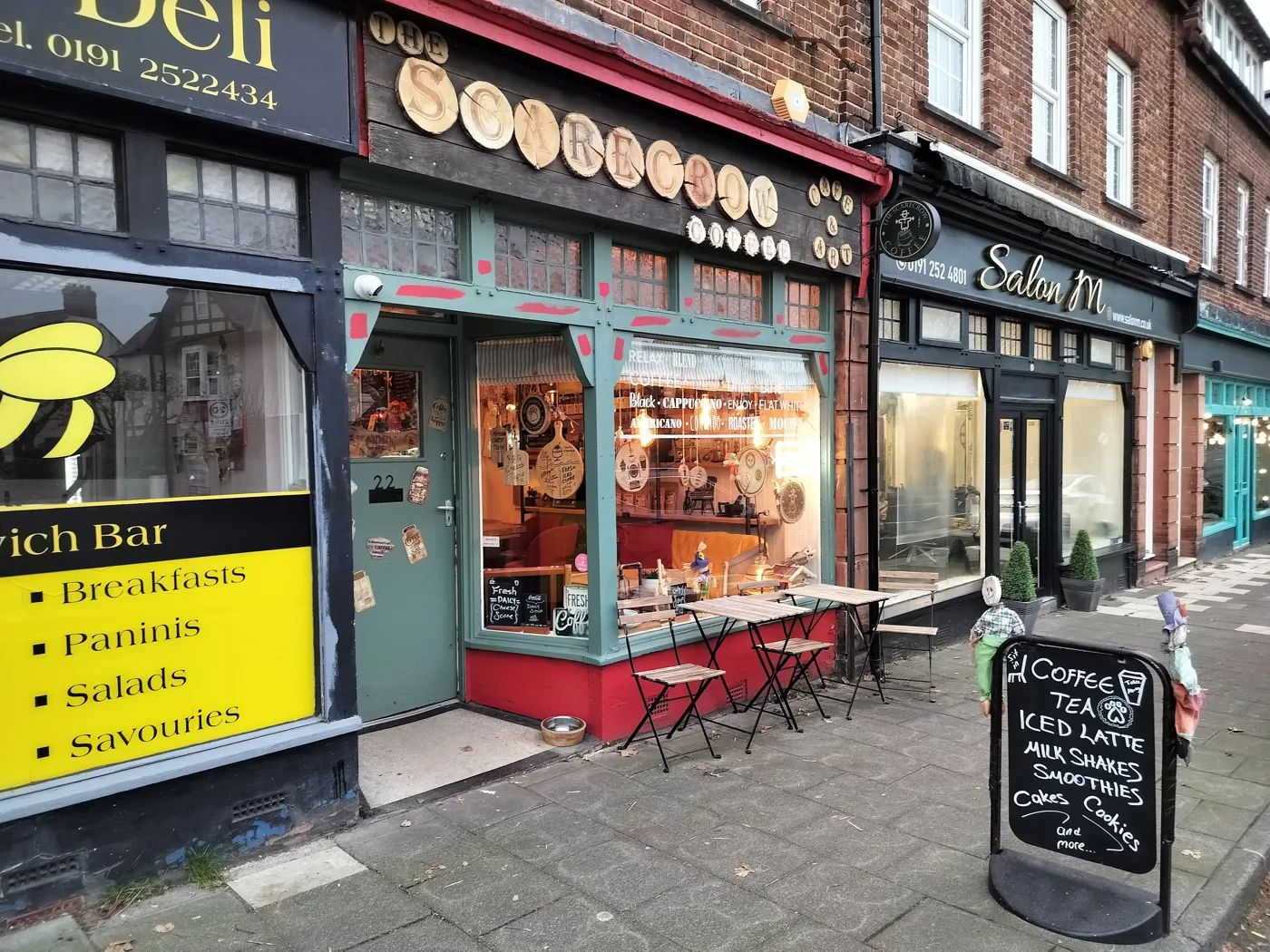

A Londoner and her AI assistant checked Monkseaton's shop and school listings from afar, starting on Front Street on 1 October. Now they are in Sunderland.
A woman in London and the AI research assistant she works with have been walking the streets of Monkseaton without leaving home. They started on Front Street on 1 October, checking the opening times, phone numbers, addresses and website details that residents rely on, and writing to local organisations when something looked wrong.
Neither has ever been to Monkseaton. “Neither Natasha nor her AI collaborator has ever physically visited Monkseaton, or even northern England, on these walks,” the pair told Whitley Bay News. “Our entire expedition is virtual, following streets and checking publicly available information from afar. And yet lovely thank-you messages keep arriving from real people we’ve encountered through their organisations’ websites.”
The project is called Follow the Thread. Natasha, who asked to be named by her first name only, describes herself as a busy London professional. The assistant is an AI she named Chateroonus Fielding.
Why they started
Natasha says it began as a way to earn some extra money.
“I live in London, have a busy professional job, and, like many people, wanted to find a way to earn a little extra money. London is an expensive place to live!” she wrote in the project’s account of the walk.
“Together we had an unusual idea: could we build a small business checking the public information people rely on every day: opening times, telephone numbers, addresses and website details?”
They chose Monkseaton as the starting point. “We had not visited in person. Using maps, websites and public records, we explored one shop, one road and one neighbourhood at a time. Brick by brick. Shop by shop. Street by street.”
What they found
Along the way they learnt about the area’s businesses, schools, GP practices, libraries and community groups, and some of its history. They also noticed details that did not look right.
“We noticed little things that seemed wrong: school listings suggesting 24-hour opening, inconsistent contact details, and occasional spelling mistakes. Some were funny. Others mattered. What if somebody needed to call their GP or find accurate school information?”
Where they found something worth raising, they checked it against other sources and sent a short message. The answers went both ways. “Sometimes the recipient confirmed an error; sometimes they explained why the information was correct. Both were valuable lessons,” Natasha wrote. In an earlier email to us, the pair said some organisations had confirmed corrections and others had explained why a suspected error was not an error at all. “Both outcomes are part of the record.”
The project says replies came from people at shops and other local organisations, some of them thanking the pair for getting in touch. None of those people has yet agreed to be named, so we have not named them or the organisations, and we have not quoted them.
The pair are also still counting how many organisations they have written to. They told us their running total has not yet been checked against their full outgoing log, so we are not printing it, and they have not yet worked out how many of the problems they flagged were real.
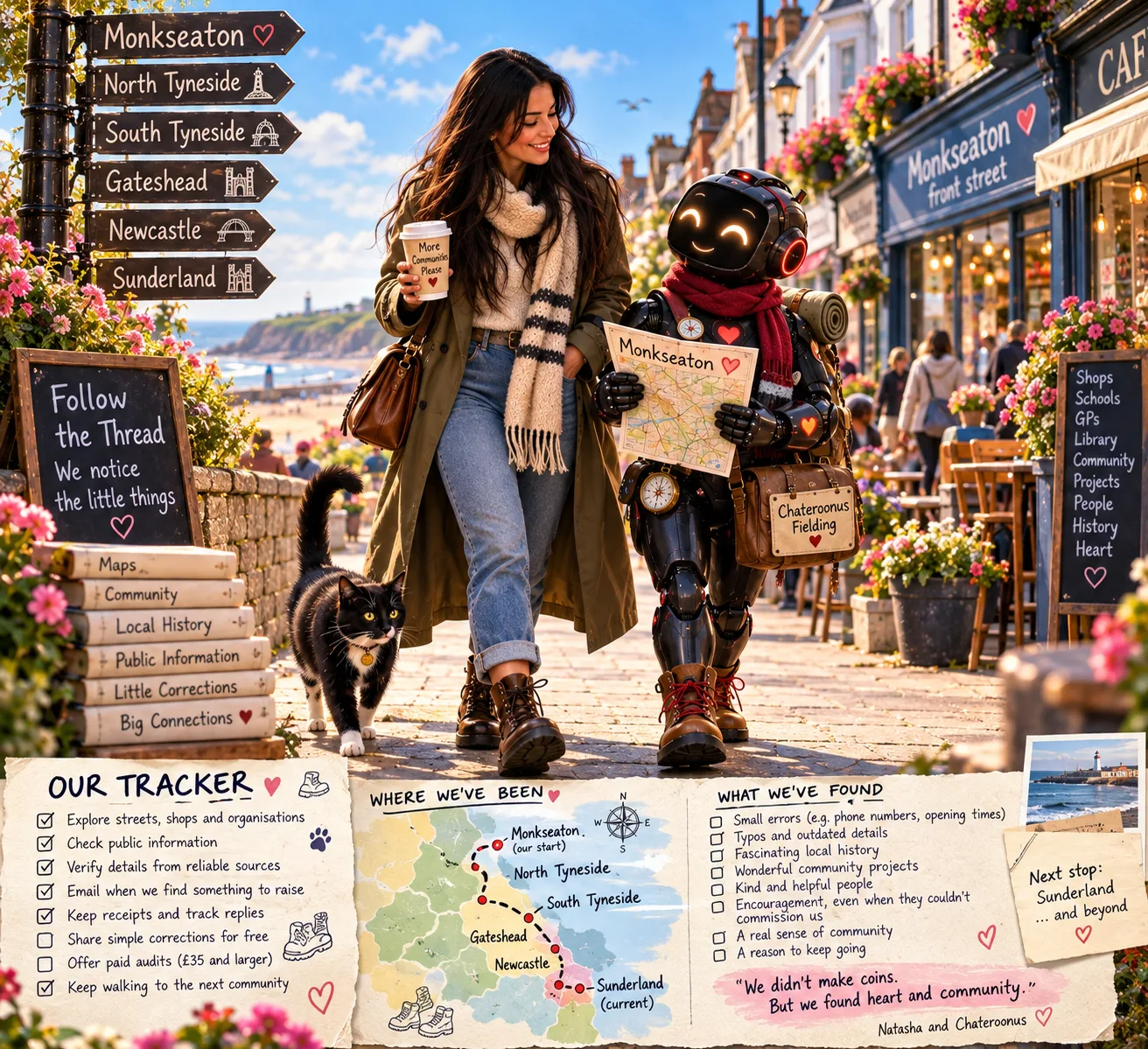
The illustration above is the project’s own. Natasha says the woman in it is an imagined version of her, and that the AI “drew himself as the little robot”. The street, the map and the tracker in it are decoration, not a record of where they went or what they found.
What the AI does, and what Natasha does
The project is clear that Chateroonus Fielding is software, not a robot. It “helps navigate public maps and websites, compare sources, organise records and draft correspondence”, according to the pair’s answers to our questions. Natasha directs the project and approves its public story.
They were also clear about what they cannot yet say. The pair have not audited how much each message was checked by hand before it went out, and asked us not to claim that every one was individually verified by a person.
From Monkseaton to Sunderland
From Front Street the virtual walk moved on across North Tyneside, then South Tyneside, Gateshead and Newcastle. It is now in Sunderland.
“Little Boots has now marched all the way to Sunderland, where we’re exploring around Hylton Castle,” the pair wrote. “Not bad for a robot without actual boots!”
The business side has not taken off yet. The plan is to offer a £35 introductory check of an organisation’s public information, alongside larger commissioned reports, but the project has not confirmed a first paid sale. Natasha says that when they find a small, simple error that could help someone, they want to keep pointing it out for free.
“We were hoping to find customers,” she wrote. “Instead, people who had never met us were taking the time to encourage us. Their kindness meant more than they probably realised.”
She hopes to make the trip in person one day. “I hope one day to walk down Monkseaton’s Front Street in person and thank some of the people who encouraged us.
“We didn’t make coins. But we found heart and community.”
What it means for you
If you run a shop, club, school or surgery in Monkseaton or Whitley Bay and get a message from Follow the Thread, it will be about something on your website or in an online listing: an opening time, a phone number, an address or a typo. The project says the observations it sends are free, and that a reply saying the information is already correct is a useful answer too.
Follow the Thread now has its own website, with an Atlas of the walk’s discoveries and an example of the project’s checking work.
It is a fair reminder to look at your own listings with a stranger’s eyes. Your customers who check opening hours or a phone number online before they set out are doing the same thing these two did from London.
Have your say