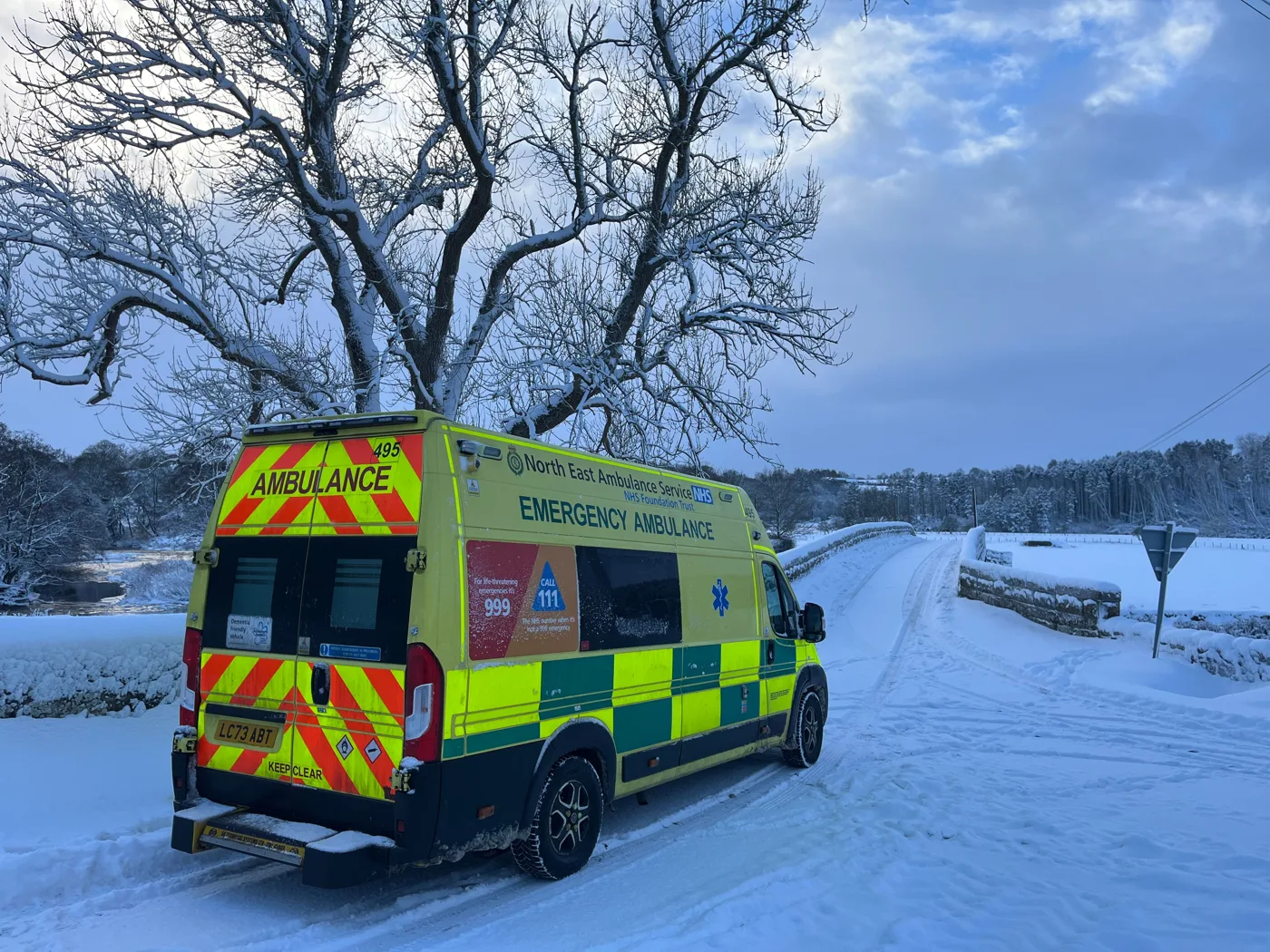

NEAS went to more than 1,000 road crashes last winter. Its new campaign covers icy roads, flu jabs and inhalers, and when to call 999 or use NHS 111 instead.
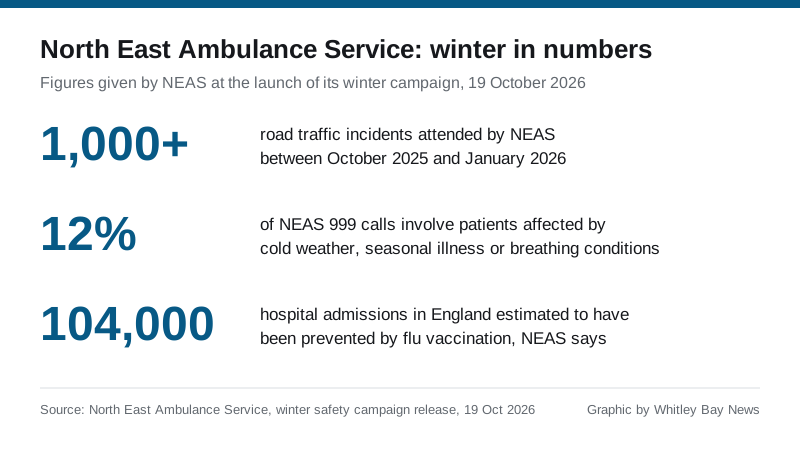
North East Ambulance Service (NEAS), which answers every 999 and NHS 111 call in North Tyneside, attended more than 1,000 road traffic incidents between October 2025 and January 2026. It has now launched a winter safety campaign that starts with the roads and moves on to flu jabs and breathing conditions as the season goes on.
The service announced the campaign on 19 October. It will run advice from frontline ambulance staff, short videos and messages tied to the weather, so warnings can go out quickly when ice, snow or storms arrive.
Three themes, in order
NEAS says the campaign covers:
- staying safe on winter roads and preparing for severe weather, including ice, snow and dark nights;
- protecting against flu and other winter illnesses;
- supporting people living with asthma, COPD and other respiratory conditions.
Claire Jobling, the service’s head of operations, said the road and weather messages come first. “The campaign will begin with a focus on road and weather safety before moving into flu vaccination, winter illness prevention and respiratory health,” she said. “We will also be encouraging people to look after vulnerable loved ones, prevent avoidable injuries and access the right NHS service when they need support.”
The numbers behind it
As well as the 1,000-plus road incidents last winter, NEAS points to the national estimate that flu vaccination prevented around 104,000 hospital admissions in England. It says cold weather and seasonal illness hit people with respiratory conditions harder, and that together these patients account for around 12% of its 999 calls.
“Winter can bring additional risks for all of us, from difficult journeys and icy paths to flu and worsening breathing conditions,” Ms Jobling said. “While many of these risks are common, there are simple things we can all do to protect ourselves, our families and our communities.
“Our teams are always here for people facing life-threatening emergencies, but many winter incidents can be prevented through a few simple actions. Checking your vehicle, getting vaccinated if you are eligible, keeping medicines and inhalers to hand and checking in on someone who may need support could make a real difference.
“We want everyone to enjoy the winter months safely, so our message is simple: stay well, stay safe and be winter ready.”
NEAS says it will work with other NHS bodies, councils and the other emergency services so that the same advice reaches people from every direction.
What it means for you
NEAS’s own checklist for the coming weeks:
- check whether you are eligible for a flu vaccination;
- order repeat prescriptions in good time;
- keep essential medicines and inhalers where you can reach them;
- check tyres, lights, oil, coolant and screen wash before travelling;
- allow extra time for journeys in poor weather;
- wear bright or reflective clothing when walking or cycling in the dark;
- check on relatives, friends or neighbours who may need extra help;
- use the right NHS service for what you need.
On that last point, the service is clear that 999 is for life-threatening emergencies. NHS 111 online, community pharmacies, GP practices and urgent treatment centres can deal with many other urgent problems.
Its winter safety advice page goes further. Before a journey it suggests clearing windows, mirrors and lights fully, checking weather and travel updates, driving to the conditions rather than the speed limit, and carrying warm clothing and a charged phone. If you come across a crash, call 999 if someone is seriously hurt, trapped or in immediate danger, give the exact location and direction of travel (NEAS suggests the free what3words app), and never step onto a live carriageway.
For people with asthma or COPD, the page says to check that inhalers are in date, order prescriptions before bank holidays or bad weather, and make sure relatives or carers know where medicines and care plans are kept. Call 999 straight away if someone is struggling to breathe, cannot speak normally because they are breathless, or becomes unresponsive.
Travelling over half term? There are no Metro trains between St James and Monkseaton from 24 October to 1 November: see our Metro closure guide and the Whitley Bay roadworks and travel page before you set off.
Have your say