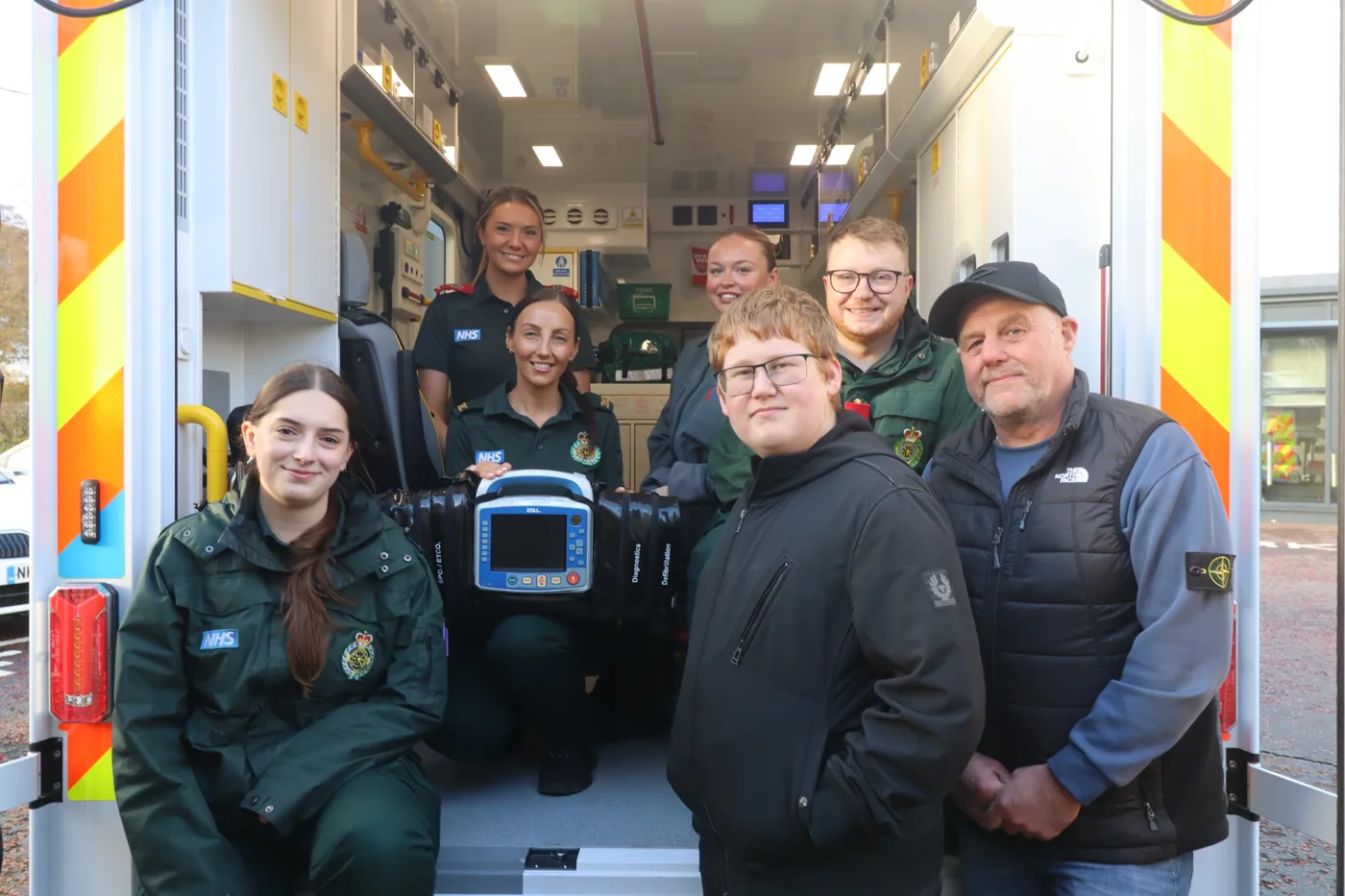

Thomas Raw, 16, called 999 when his dad's heartburn was in fact a heart attack. Crews saved him after his heart stopped. Father and son have met them again.
A 16-year-old called 999 when his father’s chest pain, which both of them first took for heartburn, turned out to be a heart attack; shortly after the first ambulance crew arrived his father’s heart stopped and they started CPR. Philip Raw has since recovered and has met the North East Ambulance Service (NEAS) team again to thank them, and to see his son Thomas recognised for his part that evening.
NEAS answers every 999 and NHS 111 call in the region, North Tyneside included, so the health advisor who took Thomas’s call works the same lines a Whitley Bay caller would reach. The trust published the account on 6 November.
“I just kept asking how long they would be”
It happened at home on 5 August 2026. Philip said: “I initially thought it was heartburn and took a tablet, but when the pain came back, I knew something wasn’t right. That’s when I asked Thomas to phone an ambulance.
“I remember him speaking to the health advisor and answering questions. The pain was getting worse and I just kept asking how long they would be.”
Thomas said: “I think instinct just kicked in when Dad became unwell and I knew I needed to call 999. I tried to stay calm, listen to what the health advisor was telling me and answer their questions so we could get Dad the right help as quickly as possible.
“When the ambulance arrived, I went outside so the crew could see where they needed to go. I’m just glad I was there and able to help Dad when he needed me.”
Marina Block, the health advisor who took the call, said: “Chest pain can be a sign of a heart attack, so it’s important to call 999 if you think someone is seriously unwell and follow the advice you’re given.
“Thomas did a brilliant job. He stayed on the line, listened carefully and helped us make sure his dad got the help he needed.”
The moment his heart stopped
Philip said: “When Thomas said the ambulance crew had arrived, he ran out to get them and that’s when I collapsed. I believe that’s when my heart stopped and the crew started CPR.”
The first crew was paramedic Adam Hall, apprentice ambulance support practitioner Emily Thomas and student paramedic Eleanor Toogood. Adam said: “Philip had suffered a heart attack and, shortly after we arrived, his condition deteriorated and he went into cardiac arrest. We immediately started CPR and lifesaving treatment to give him the best possible chance of survival.
“Every second counts in a cardiac arrest, so recognising it and starting treatment quickly is incredibly important.”
While they worked, the crews looked after Thomas too. “One of the ambulance crew took Thomas into the back room, away from where I was, so he didn’t have to see them working on me,” Philip said. “The crew were very helpful and kept praising Thomas.”
Ambulance support practitioner Elizabeth Jackson, who came with the second crew alongside paramedic Oliwia Malecka, said: “It must have been an incredibly frightening experience for Thomas, but despite everything happening around him, he showed remarkable bravery and maturity.
“It was a real privilege to be there for him and his dad, and we’re incredibly proud of the part he played that evening.”
Back on holiday
Philip’s care continued at James Cook University Hospital. The trust says he has made a good recovery and is back to everyday life, spending time with his family and going on holiday with them.
Oliwia Malecka said: “We wanted to recognise the important part Thomas played that evening in getting help for his dad. It was lovely to meet them both again in very different circumstances and see Philip doing so well.
“We don’t always get to see our patients again after an incident like this, so bringing everyone back together was really special.”
Philip said: “I just want to thank them for saving my life and for the work they do every day. I’m so grateful to them all.
“If I’m honest, I try not to think about it because I realise how lucky I was. If it wasn’t for my son Thomas and the ambulance crews, I wouldn’t be here to tell my story.”
Why the first minutes matter
According to NEAS, only one in 10 people survive to go home from hospital after a cardiac arrest, and every minute without CPR and defibrillation cuts the chance of survival by around 10%. CPR keeps blood flowing to the vital organs and takes a few minutes to learn.
- NEAS explains how to learn CPR on its learning CPR page.
- The British Heart Foundation sets out the difference between a heart attack and a cardiac arrest.
In 2025/26 the service answered more than 1.475 million 999 and NHS 111 calls and reached more than 40,444 category 1, life-threatening incidents in an average of 6 minutes 17 seconds, the trust says. Last month it brought another survivor back to meet her crew for Restart a Heart Day at Newcastle College.
Have your say