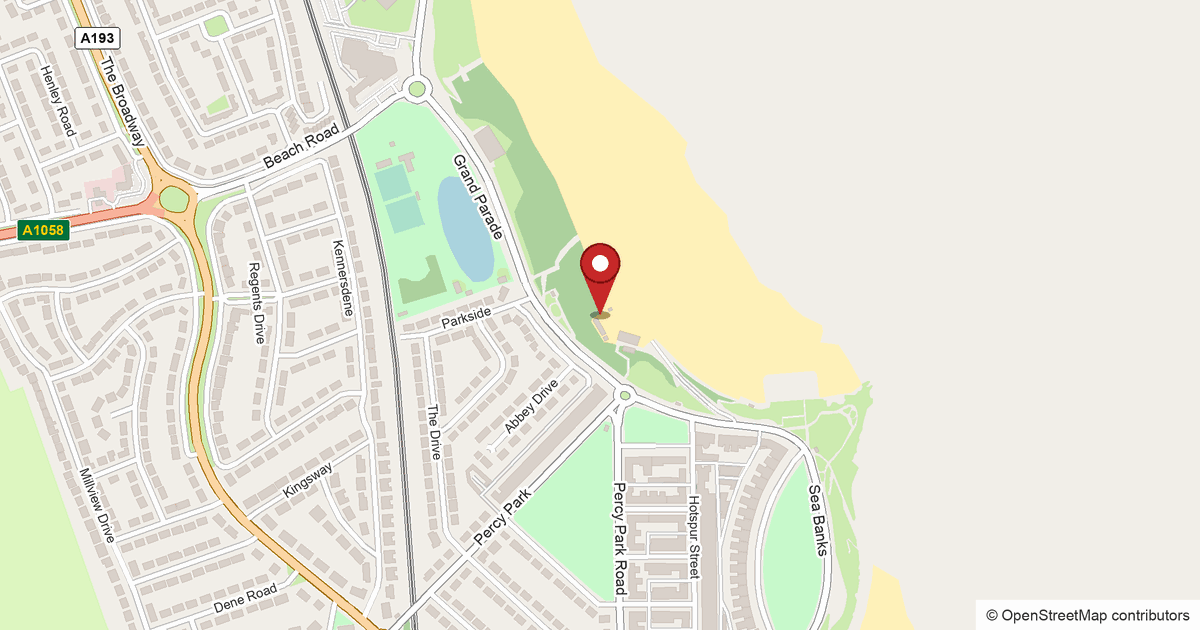

North Tyneside Council wants to demolish two unsound buildings on Tynemouth Longsands beside Crusoe's. The roof of the larger one is held up by props.
Overview
North Tyneside Council has applied for permission to knock down two buildings on Tynemouth Longsands. They sit on the beach beside Crusoe’s cafe. The council says they are structurally unsound, and the roof of the larger one is being held up by steel props. The RNLI lifeguard station nearby is not part of the plan.
The application, 26/01584/FULDEM, was validated on Tuesday 17 November. The council is both the applicant and the planning authority. It needs permission because the beach lies inside the Cullercoats Conservation Area.
The application form gives one reason: “The buildings are not structurally sound and require demolition.”
What would come down
The council’s heritage statement describes the two buildings, which the project calls the Tynemouth Beach Base:
- a long, low building with a concrete frame and a felt roof, about 25 metres long, 6 metres deep and 2.3 metres high
- a smaller brick building with a felt roof, about 6 metres square
The statement says both are “in a state of structural disrepair”. Props are supporting the ridge of the concrete building “to prevent further movement of the structural frame”.
The demolition plan shows the larger building’s concrete slab being kept and the smaller building’s slab removed. The RNLI lifeguard station is marked on the same drawing as an existing building outside the works area.
The council’s record links the application to three addresses on the beach: the lifeguard station, the unit next to it, and Tynemouth Canoe and New Wave Ski Club. The documents do not say what, if anything, will replace the buildings.
Why the council says they can go
The heritage statement judges the buildings to have “limited architectural and historic significance”. It accepts the long building has “some visual presence” because of its position on the open beach. But it says this does not make it a landmark, and that its condition limits what it adds to the seafront.
It also notes the buildings may have “some local historic interest” from their past use on the beach. It found no link to notable people or events.
How the work would be done
The council’s demolition plan sets out how a specialist contractor would clear the site:
- solid hoarding around the buildings
- a temporary vehicle route across the sand from the access road, fenced off with pedestrian barriers during the day
- the four accessible parking bays at the bottom of the access road used as a spoil area while the work goes on
- a banksman on duty at all times, with a marked pedestrian crossing point
- asbestos and other hazardous materials removed first, then the buildings
- the beach re-graded afterwards to remove holes and sudden changes in level
Because the beach is next to protected coastal wildlife sites, the council commissioned an ecology report from EcoNorth. It says no work would take place within two hours either side of high tide, and work would stop at once if the tide comes in.
The report also sets out noise screening, a soft start for any hammering, and monitoring of the wading birds that feed and roost on the shore, including purple sandpipers and turnstones. It concludes that with those measures there would be no harm to the protected sites.
The same report says the work was expected to start in November 2026 and last a few weeks. That depends on permission. The register gives an internal target date for a decision of Tuesday 5 January 2027.
What it means for you
- Disabled parking at the bottom of the access road would be lost for the length of the job, because the four accessible bays become the spoil area.
- Walkers on the sand would meet hoarding and barriers around the buildings beside Crusoe’s, with a banksman managing crossings when lorries move.
- You can comment on the application on the council’s planning register under reference 26/01584/FULDEM. No consultation end date had been posted when we checked on 18 November.
Have your say