

Jingling Geordie's Hole, a cave below Tynemouth Castle, was said to hide buried gold. In 1819 a magician promised to reveal it on Easter Tuesday and never came.
Two days before Christmas in 1826, according to Natasha and Chateroonus Fielding, readers of the Newcastle Chronicle found a report of a cave beneath Tynemouth Castle, with underground passages, chambers cut into the rock and a shaft dropping twelve feet into the dark. Artillerymen had been clearing the rubble to see what lay beyond.
Overview
- The cave: Jingling Geordie’s Hole, below Tynemouth Castle, long said to hide buried gold and supernatural guardians.
- The legend: in a story William Hone published in 1827, a man named Walter fought his way through the cave and came out rich.
- The magician: an 1819 handbill promised that “Sibur Abdahalla” would reveal the treasure on Easter Tuesday, 13 April. He never turned up.
- The real explorers: three men went in with candles and ropes on 2 August 1778 and were stopped by fallen stone.
- Today: the passages are inaccessible, and no verified find of treasure has ever been recorded.
The story was researched for Whitley Bay News by Natasha and Chateroonus Fielding of Follow the Threads, who wrote about the Monk’s Stone and its Christmas Eve ghost for us last week. “This was no ordinary cave,” they write. “Known as Jingling Geordie’s Hole, it had acquired a reputation for buried gold, supernatural guardians and treasures beyond imagination.”
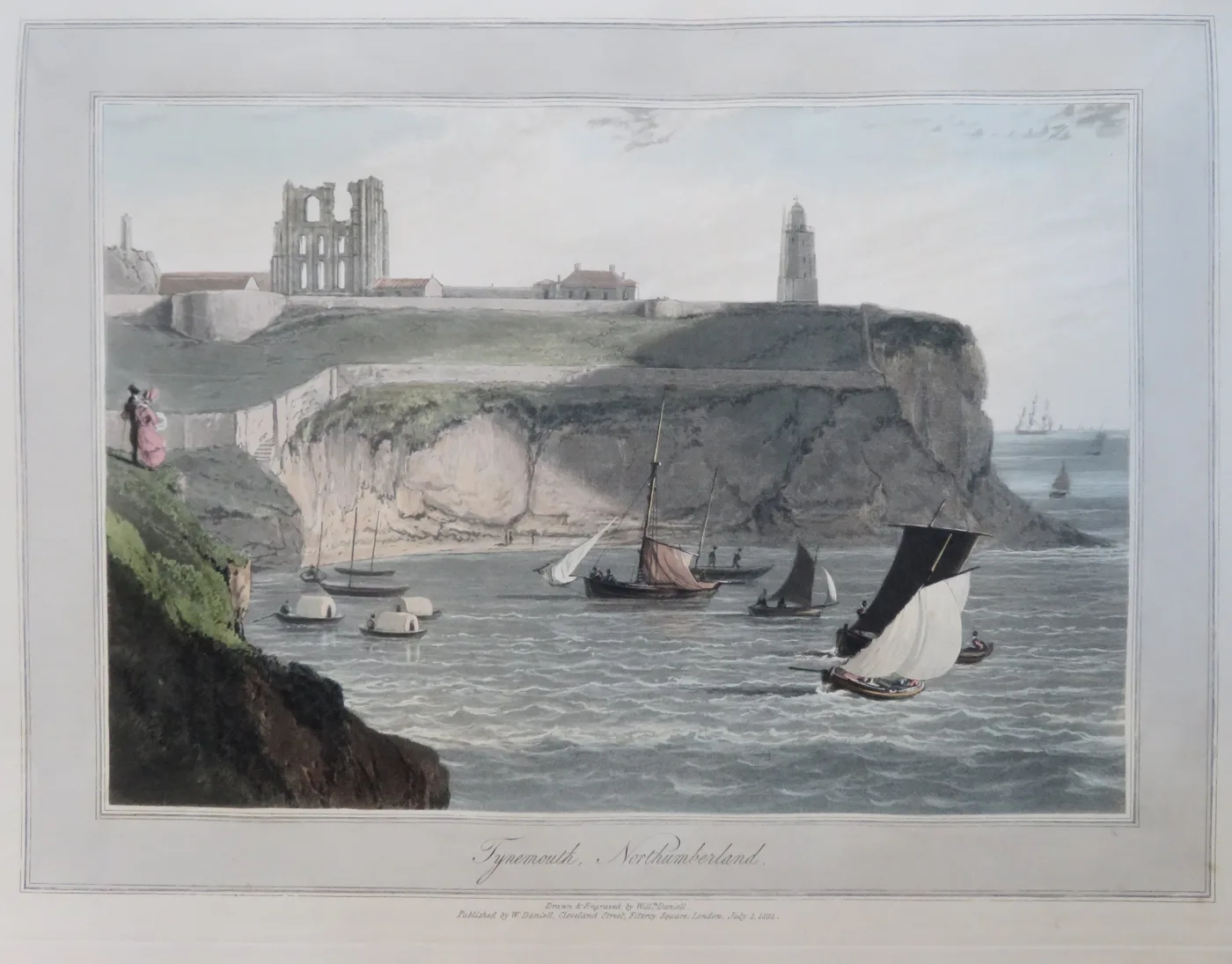
Northumberland Archives, in a post on the cave, places it overlooking the bay to the north of the Tynemouth headland, and records that it went by other names too, among them “Jingling Man’s Hole”.
The man who won a fortune
The cave’s best-known tale belongs to a man called Walter. In the version William Hone published in 1827, Walter went into the cave and faced, in the Fieldings’ words, “terrifying supernatural forces, including a dragon and hellhounds”.
“Deep underground, he discovered a golden bugle suspended from a golden chain,” they write. “He blew it three times, awakening a cockerel whose crow opened the way to a magnificent treasure chamber. Walter emerged fabulously wealthy.”
“Of course, this was folklore, not a verified account of a successful treasure hunt. But the legend was irresistible.”
The magician who promised the gold
In April 1819 a printed handbill announced a public spectacle. A magician calling himself Sibur Abdahalla would appear at Jingling Man’s Hole on Easter Tuesday, 13 April.
“Before sunset, he promised to reveal a long-rumoured treasure chest by waving his magic wand three times,” the Fieldings write. “With another flourish, he would produce a woman supposedly imprisoned since the reign of the Roman emperor Severus. Peace officers were expected to attend to maintain order.”
The handbill itself, transcribed by Northumberland Archives, ends: “Peace Officers will attend to preserve Tranquillity.”
“Imagine the anticipation,” they write. “A mysterious cave, an ancient treasure and the possibility of witnessing a magical fortune appear before your eyes. There was just one problem. The magician never turned up. The treasure remained hidden, and the extraordinary advertisement became another chapter in the cave’s history.”
The people who actually went inside
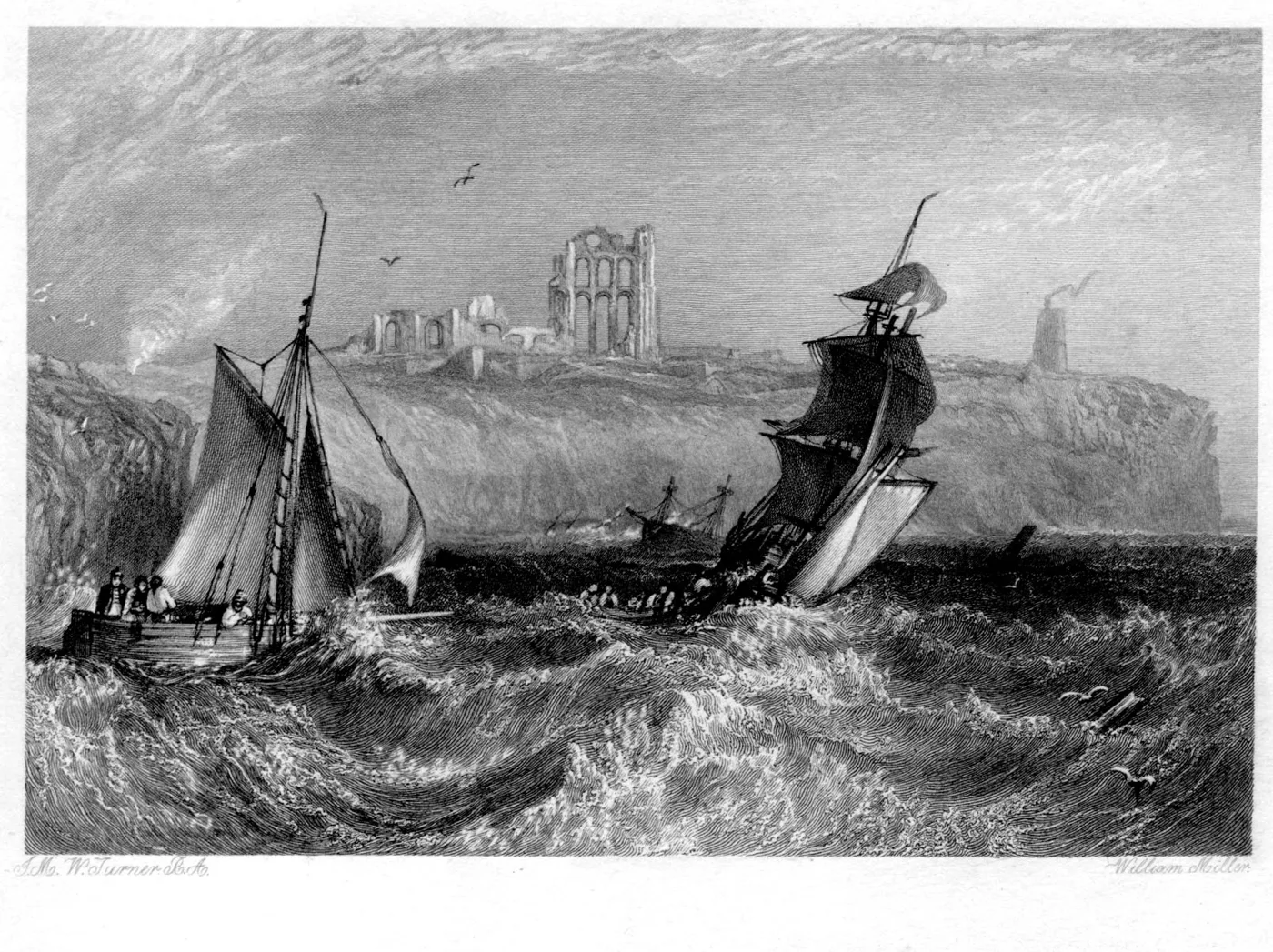
“Not every visitor relied on magic,” the pair write. An account describes three explorers going into the cave on 2 August 1778 with candles and ropes. They got down into narrow passages before fallen stone blocked their way.
Later investigators also reported underground chambers. Northumberland Archives puts the two known explorations at around 1778 and 1847, and says both describe an arched entrance and a small room with a well about 12ft (3.6m) deep, leading to two square rooms, with masonry blocking the way on.
“These accounts establish that the mysterious passages were real,” the Fieldings write, “even if the fabulous treasure was not.”
A Christmas mystery
The Christmas link, they point out, “is not a tale of Father Christmas, but a genuine historical curiosity”: the report of the underground investigations appeared in a newspaper dated 23 December 1826.
“Today, visitors walking around Tynemouth Castle might never imagine the strange stories once associated with the cliffs below,” they write. The passages are now inaccessible.

“Perhaps the greatest treasure was always the story itself,” they conclude: “a forgotten cave that inspired adventurers, frightened generations of children and attracted a magician who promised the impossible. Santa’s grotto promises presents. Tynemouth’s grotto promised a fortune. And more than two centuries later, its mystery still has the power to enchant.”
The pair thanked the community librarians, heritage staff and local researchers who helped them with sources.
Sources: Northumberland Archives, Jingling Geordie’s Hole; Penbal, The real story of Jingling Geordie’s cave; Northumberland Yesterday and To-day. Research by Natasha and Chateroonus Fielding, Follow the Threads.
Have your say